
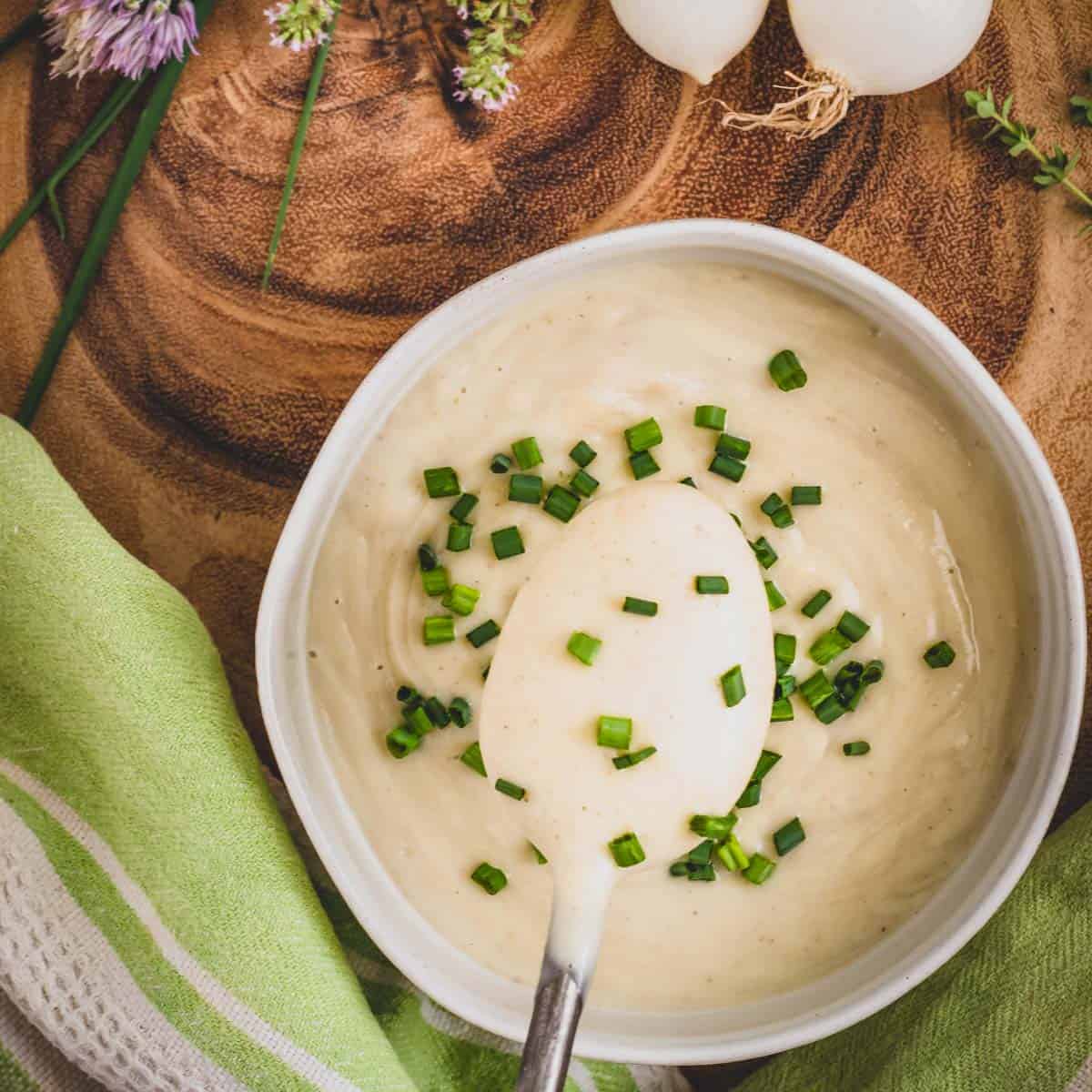
This Cauliflower Cream is silky, savory, and full of flavor from artichokes, garlic, and miso. A lighter, low-saturated-fat sauce to support cholesterol and weight-management goals, it’s delicious over pasta, vegetables, or potatoes-without cream, butter, or added oil.
Save This Recipe!
Type your email & I’ll send it to you!
Jump to:
- 🔍 Quick Look: Cauliflower Cream
- 👩🏽⚕️ Dietitian’s Note
- 👩🏼🌾 Ingredients
- 🌱 Substitutions
- 📝 How to Make Cauliflower Cream Sauce
- 🥣 What Is Cauliflower Cream?
- 🌿 How to Use Cauliflower Cream Sauce
- ✔️ Storage & Meal Prep Tips
- 🙋🏽♀️ Recipe FAQs
- 🍽️ Related Recipes
- 👩🏽🍳 Made this recipe?
- ⚖️ Convert the Recipe to Metric (g & mL)
- Cauliflower Cream Recipe (Vegan, Oil-Free)
- 🛍️ Shop Recipe Cookware and Ingredients
- 💬 Comments
🔍 Quick Look: Cauliflower Cream
- ⏱️ Prep Time: 15 minutes
- 🎛️ Cook Time: 5 minutes
- 👥 Servings: 3
- 📊 Calories: ~125 kcal (based on nutrition panel)
- 👩🏽🍳 Flavor Profile: Creamy and savory with mellow garlic, tangy artichokes, and bright lemon.
- 💪🏼 Nutrition: 11 grams of protein, 8 grams of fiber.
- ⭐ Difficulty: Easy-steam, blend, and gently warm.
👩🏽⚕️ Dietitian’s Note
Cauliflower adds volume and creamy texture with relatively few calories, making it useful for creating lighter, satisfying meals. Blending it with artichokes creates a fiber-containing sauce without heavy cream or butter. Swapping this cauliflower cream for sauces high in saturated fat can support your cholesterol and weight-management goals.
Why You’ll Love This Recipe:
This white cauliflower sauce makes everyday meals taste rich and comforting while keeping them light. Here’s why you’ll love it:
- Light yet creamy: Silky texture without heavy cream, butter, or added oil.
- Big on flavor: Garlic, artichokes, and miso add savory depth, balanced with fresh lemon.
- More vegetables, effortlessly: A delicious way to add cauliflower to everyday meals.
- Easy to make: Simply steam, blend, and gently warm.
- Endlessly versatile: Spoon over vegetables, toss with pasta, or spread on pizza.
- Great for meal prep: Refrigerate or freeze for an easy sauce whenever you need it.
👩🏼🌾 Ingredients
Below, I share ingredient notes from both a nutrition expert’s and trained chef’s perspective.
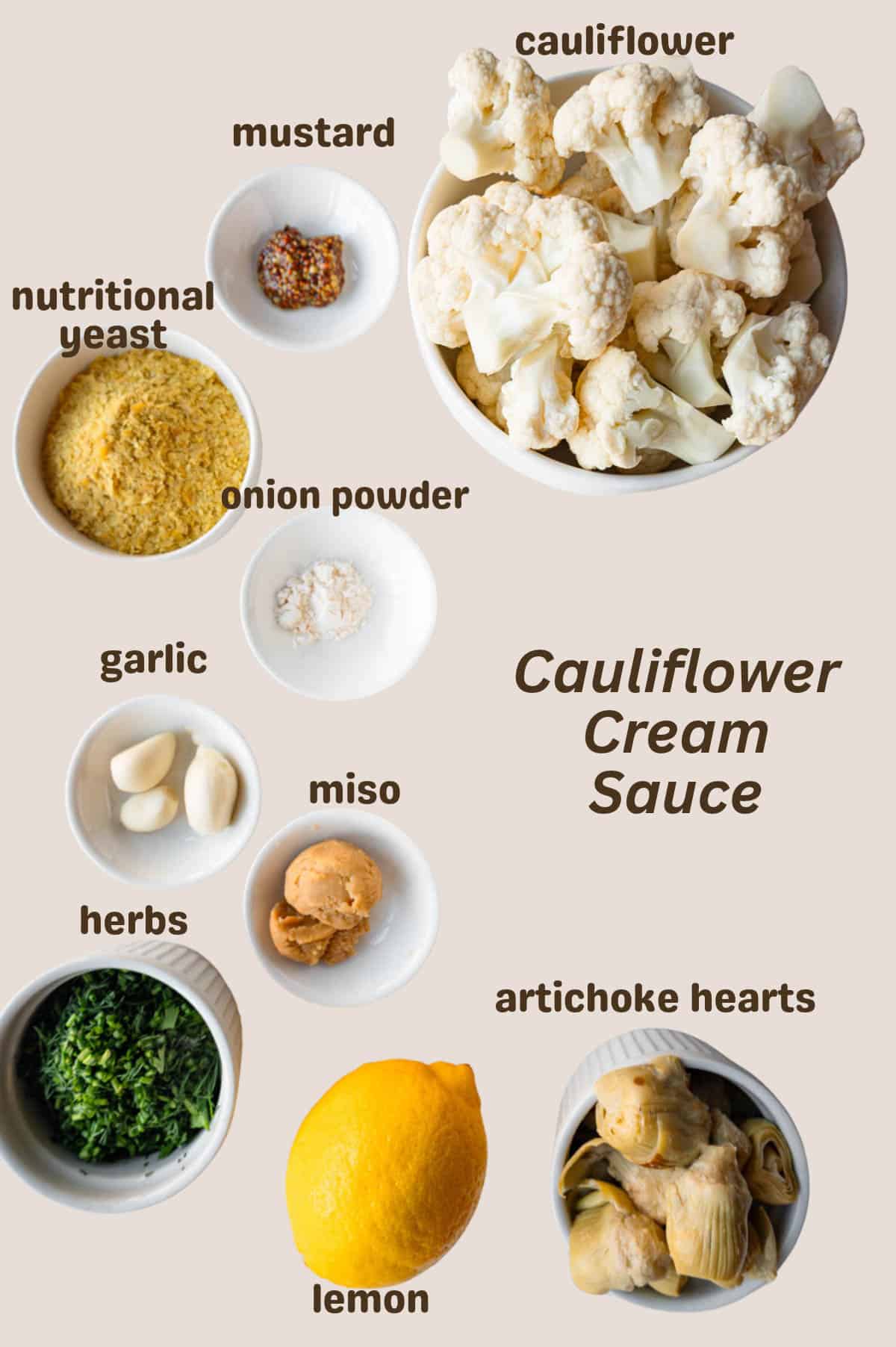
- Cauliflower: Creates the creamy base. Steam until very tender for the smoothest cauliflower cream.
- Garlic: Steaming the cloves mellows their sharpness and helps them blend smoothly.
- Artichoke hearts: Add subtle tang and savory flavor. Use drained, water-packed artichokes to keep the sauce oil-free.
- Nutritional yeast: Adds a cheesy, savory taste without dairy.
- Stone-ground or Dijon mustard: Gives the white cauliflower sauce a little tang.
- Onion powder and black pepper: Add flavor without extra chopping.
- Unsweetened nondairy milk or vegetable broth: Helps the cauliflower blend into a smooth sauce. Choose unflavored milk or a light-colored broth for a pale sauce.
- White miso: Adds savory depth and saltiness. Dissolve in water before stirring into the sauce.
- Fresh herbs: Parsley, dill, and chives add freshness. Stir them in at the end rather than blending if you want to keep the sauce pale with flecks of green.
- Lemon zest and juice: Brighten the cauliflower cream and balance its savory flavors.
See the printable recipe card below for quantities.
🌱 Substitutions
This recipe is versatile and easy to adapt. Below are some simple ingredient substitutions.
- Fresh cauliflower: Use frozen cauliflower florets instead. Steam until very tender and drain well.
- Canned artichoke hearts: Substitute thawed frozen artichoke hearts, cooked until tender.
- Nondairy milk: Use unsweetened, unflavored soy, oat, hemp, or cashew milk. Choose soy or oat for a nut-free option.
- Vegetable broth: Use instead of nondairy milk. Low-sodium broth makes it easier to adjust the seasoning after adding miso.
- Mustard: Use stone-ground and Dijon interchangeably.
- Fresh herbs: Use parsley alone or a combination of parsley, dill, and chives.
- Gluten-free: Choose gluten-free miso and check the mustard and broth labels.
📝 How to Make Cauliflower Cream Sauce
The complete recipe with exact amounts is below. These additional tips will help you get the best results.
🥣 What Is Cauliflower Cream?
Cauliflower cream is cooked cauliflower blended with liquid until smooth. It creates a vegetable-based alternative to cream sauces that you can spoon over food, toss with pasta, or stir into savory dishes.
This version includes artichoke hearts, nutritional yeast, garlic, mustard, and miso for extra flavor. The result is a cauliflower cream sauce with savory depth and a fresh lemon finish.
The texture is creamy, but lighter than a traditional dairy cream sauce. It also has a mild vegetable flavor, complemented by the artichokes and seasonings.
🌿 How to Use Cauliflower Cream Sauce
Spoon over roasted vegetables: Pair with Roasted Kabocha Squash, broccoli, carrots, or Brussels sprouts. The silky sauce complements their caramelized edges and natural sweetness.
Serve with potatoes: Spoon over Healthy Mashed Sweet Potatoes or Potatoes for Diabetics for extra creaminess.
Add beans: Make these White Beans in Cauliflower Cream Sauce for a silky, satisfying vegan dinner that’s surprisingly light.
Build a grain bowl: Drizzle over quinoa, amaranth, brown rice, or farro with roasted or sautéed vegetables.
Stir into soups: Add to vegetable or mushroom soup for creamy texture and savory depth. Adjust the amount to taste.
Enjoy as a soup: Thin the cauliflower cream with vegetable broth to your desired consistency and warm gently. Top with fresh herbs, black pepper, and whole-grain croutons for a light, creamy soup.
Toss with pasta: Combine with hot pasta and a splash of reserved pasta water until the noodles are evenly coated. Finish with black pepper and fresh herbs.
Make a white pizza: Spread a thin layer of thick cauliflower cream over pizza dough. Top with mushrooms, spinach, or your favorite vegetables, then bake until the crust is golden.
✔️ Storage & Meal Prep Tips
Refrigerate: Store cauliflower cream in an airtight container for up to 5 days.
Reheat: Warm gently on the stovetop, stirring frequently. Add a splash of nondairy milk, broth, or water to loosen as needed.
Freeze: Freeze in individual portions for up to 3 months. Thaw overnight in the refrigerator, then stir well or blend again if the texture separates.
Meal prep: Keep the sauce separate from pasta and grains so they don’t absorb the liquid. Add fresh herbs and a squeeze of lemon after reheating.
🙋🏽♀️ Recipe FAQs
Can I make cauliflower cream without milk?
Use vegetable broth instead of nondairy milk. Add more gradually after blending if needed to reach your preferred consistency.
Can I use frozen cauliflower for cauliflower cream sauce?
Steam frozen florets until very tender, then drain well and blend as directed. Use tenderness rather than a fixed cooking time as your guide.
Why is my cauliflower cream grainy?
The cauliflower may be undercooked or need more blending. It should mash easily with a fork before going into the blender. If the sauce is already blended but still grainy, gently cook it until the remaining pieces soften, then cool enough for your blender and blend again.
Can I use a food processor or immersion blender?
Yes, although a countertop blender generally makes it easier to achieve a silky texture. With a food processor, stop to scrape down the sides as needed. With an immersion blender, use a deep container and keep the blade submerged while blending.

👩🏽🍳 Made this recipe?
Let me know your thoughts on Cauliflower Cream by leaving a ⭐️ rating below or sharing it on Instagram.
⚖️ Convert the Recipe to Metric (g & mL)
Use these AI tools to do this:
Light, creamy cauliflower cream sauce with fewer calories than traditional cream sauces. Vegan, oil-free, and full of flavor.
Prep Time 15 minutes
Cook Time 5 minutes
Total Time 20 minutes
Course Condiment, Sauce
Cuisine Vegan
Servings 3 servings
Calories 125 kcal
- 3 cups cauliflower florets (about one medium head, or 300 grams)
- 3 cloves garlic
- 1 cup artichoke hearts drained, preferably packed in water
- 3 tablespoons nutritional yeast
- 1 teaspoon stone-ground mustard or Dijon
- ½ teaspoon onion powder
- ¼ teaspoon freshly ground black pepper
- ½ cup unsweetened nondairy milk or vegetable broth, plus more as needed
- 1 ½ tablespoons white miso or to taste
- 2 tablespoons water for dissolving the miso
- ¼ cup chopped fresh parsley
- 2 tablespoons chopped fresh dill optional
- 2 tablespoons chopped fresh chives or scallions optional
- ½ teaspoon lemon zest about one small lemon
- 2 tablespoons fresh lemon juice about one small lemon
Save This Recipe!
Type your email & I’ll send it to you!
-
Cut the Cauliflower. Cut the cauliflower into evenly sized, medium-sized florets so they steam at the same rate.
-
Steam the Cauliflower. Steam for about 10 to 12 minutes, until very tender-it should mash easily with a fork. Optional: Add the garlic during the final 5 minutes to mellow its flavor. Drain well so excess water doesn’t thin the cauliflower cream sauce.
-
Blend the Cauliflower Cream Sauce. Transfer the cauliflower and garlic to a blender. Add the artichoke hearts, nutritional yeast, mustard, onion powder, black pepper, and nondairy milk or broth. Blend until completely smooth, adding more liquid only as needed for a thick but pourable sauce.
-
Warm the Cauliflower Cream Sauce. Pour the blended sauce into a large skillet and warm over medium-low heat, stirring occasionally. Add a splash of water or broth if needed to loosen the sauce.
-
Dissolve the Miso. In a small bowl, stir the miso with the water until smooth.
-
Finish Off the Heat. Remove the skillet from the stove and let cool slightly. Stir in the fresh herbs, lemon zest, lemon juice, and dissolved miso to taste.
- Consistency: Keep the sauce thick for pizza or baked potatoes. Thin with a little nondairy milk, broth, or pasta water for pasta.
- Smooth texture: Steam the cauliflower until very tender and blend thoroughly before adding extra liquid.
- Fresh finish: Add lemon, herbs, and miso after warming. If using miso with live cultures, remember that a very hot sauce can reduce their survival even off the heat.
- Nut-free: Use vegetable broth or a nut-free nondairy milk.
- Gluten-free: Choose gluten-free miso and check the mustard and broth labels.
Calories: 125kcal | Carbohydrates: 20g | Protein: 11g | Fat: 2g | Saturated Fat: 0.4g | Polyunsaturated Fat: 1g | Monounsaturated Fat: 1g | Sodium: 210mg | Potassium: 779mg | Fiber: 8g | Sugar: 3g | Calcium: 111mg | Iron: 2mg
This information is provided as a courtesy and is only an estimate. Nutritional values may vary depending on factors such as product types and brands used.
Let me know how it was!
🛍️ Shop Recipe Cookware and Ingredients

Note: As an Amazon Associate, I earn from qualifying purchases.
Nisha’s Favorites
Get my tried-and-true products.
Leave a Reply